There’s a certain electricity that runs through the San Diego sportfishing fleet when the water starts climbing. Captains linger a little longer over satellite charts. Deckhands dig out the heavy gear. Anglers start whispering about wahoo and billfish like they’re trading stock tips. That’s exactly where we are in 2026, because El Niño San Diego conditions have officially arrived — and they’re reshaping our local fishing grounds in ways we haven’t seen in nearly a decade.
NOAA is tracking a strong El Niño event expected to persist through the winter of 2026–27, and the effects are already obvious off Point Loma. Surface temperatures are running well above normal, upwelling has weakened, and the warm-water boundary that usually sits well south of the border has crept north into our backyard. The result? Wahoo, striped marlin, dorado, and chunky yellowfin showing up closer to home than most anglers ever expect to see them.
But here’s the part a lot of folks miss: the same conditions that deliver trophy catches also stress the ecosystem that makes San Diego fishing great year after year. At Coast To Coast Sport Fishing, we’ve run through multiple El Niño cycles, and we’ve learned that the anglers who succeed are the ones who understand both sides of the story.
What El Niño Is Actually Doing to Our Water
El Niño isn’t just “warm water.” It’s a chain reaction that starts thousands of miles away in the equatorial Pacific and ripples up the California Current.
When trade winds weaken, warm water sloshes eastward and northward along the coast. That warm layer acts like a lid on the ocean. Normally, cold, nutrient-dense water upwells from below and feeds the plankton blooms that support everything from anchovies to blue whales. During a strong El Niño, that upwelling gets suppressed. The nutrients stay down deep. The surface gets warm, blue, and — biologically speaking — a little thin.
What that means for your fishing day in San Diego:
- Sea surface temps running several degrees above normal, pushing the 68–72°F band far closer to shore than usual.
- A northward shift in the warm-water boundary, dragging tropical and subtropical species up from Baja into our local counts.
- Lower overall productivity, which concentrates fish along temperature breaks, current edges, and structure rather than spreading them out.
- A volatile weather pattern, since El Niño winters in Southern California typically bring more storms, heavier rain, and unpredictable swell.
If you fished the 1997–98 or 2015–16 events, this will feel familiar. Each El Niño has its own personality — different intensity, different duration, different species mix — but the broad strokes repeat. NOAA’s California Current ecosystem assessments have documented this pattern repeatedly, and 2026 is tracking right along with it.
The Monster List: What’s Showing Up Off San Diego
This is the fun part. Here’s what El Niño San Diego waters are producing right now, and how to actually catch them.
Wahoo
Normally a Baja fish, wahoo have been making appearances remarkably close to home. These are rocket-powered predators with razor teeth and a drag-screaming first run that will humble anyone fishing light. Bring wire leaders or heavy fluoro, check your hooks, and don’t bother with a reel whose drag you don’t fully trust. Troll bombs, heavy jigs, and live bait near temp breaks all produce.
Striped Marlin
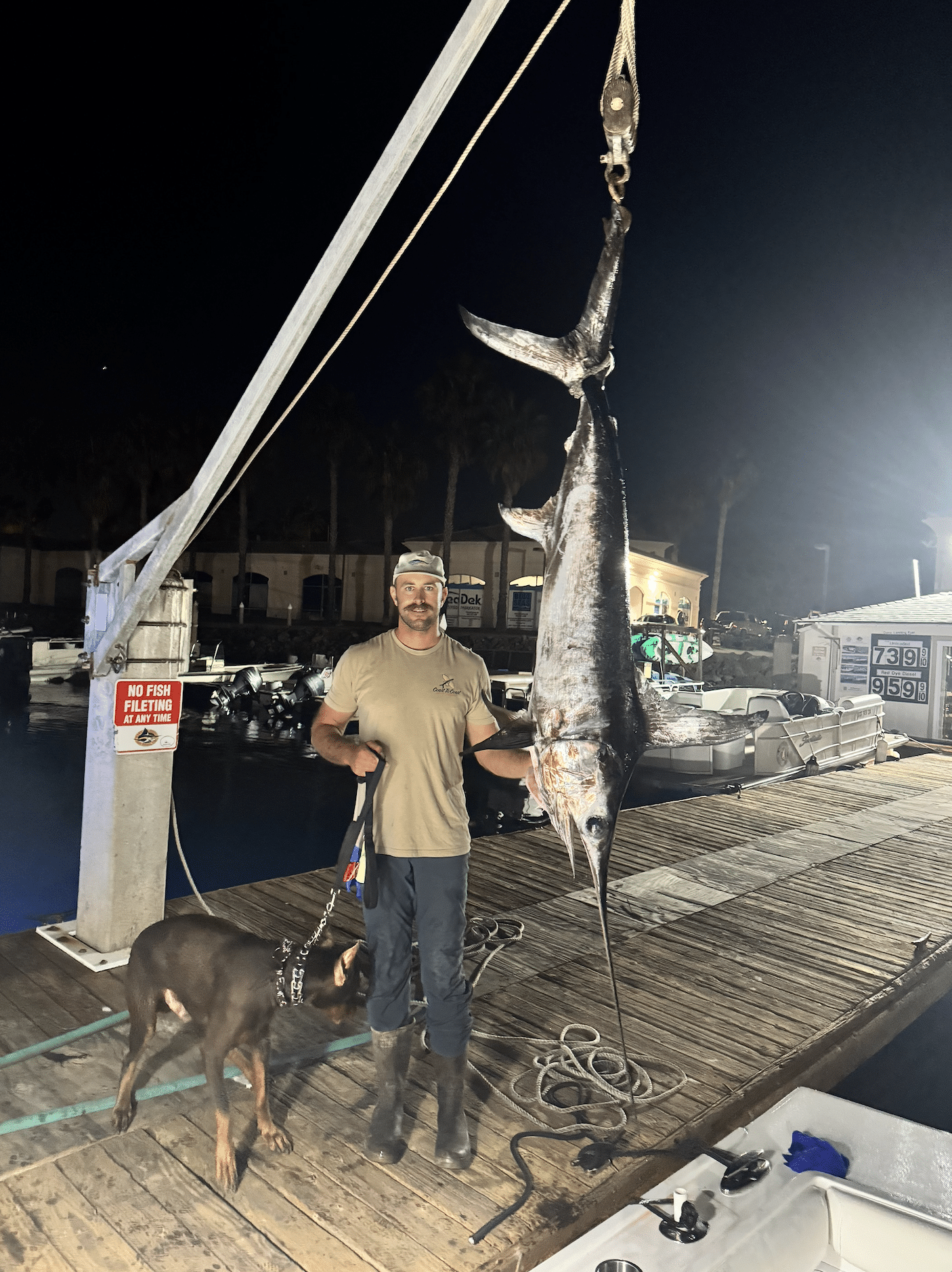
Encounters with striped marlin in waters usually dominated by local species have become a legitimate possibility rather than a fantasy. For a lot of San Diego anglers, this is a bucket-list fish available without a long-range trip. Watch for tailers on calm mornings, work the paddies and current edges, and have a bait ready to pitch at all times.
Yellowfin Tuna
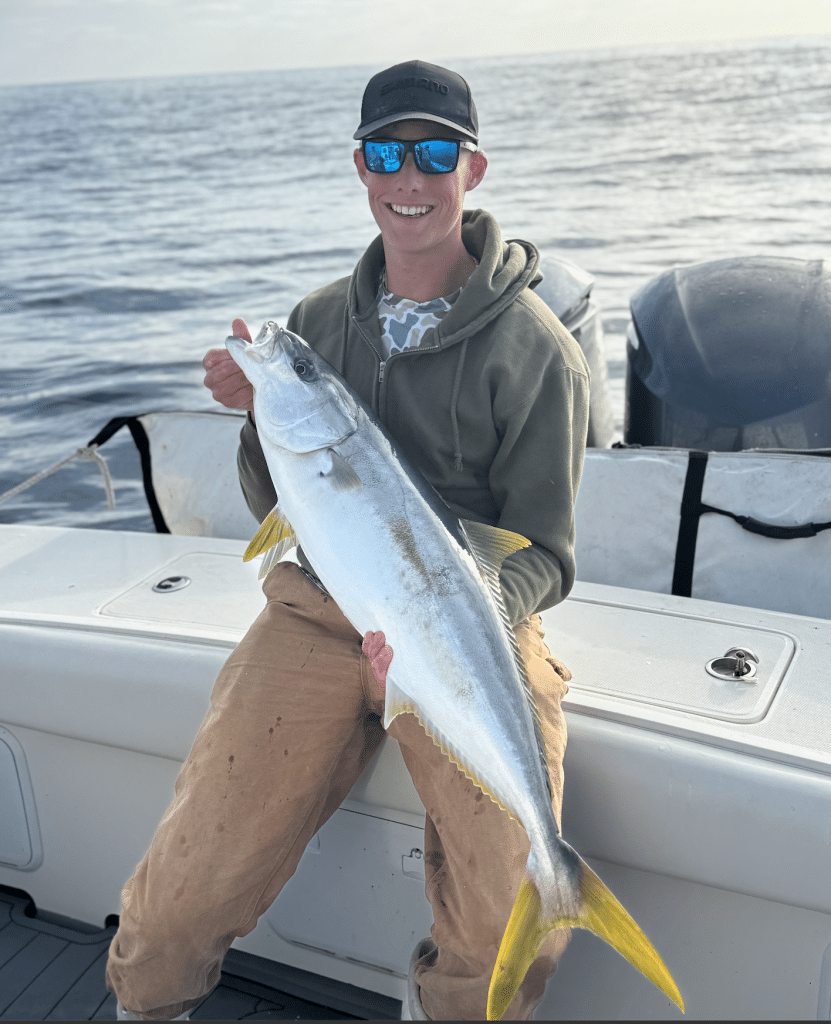
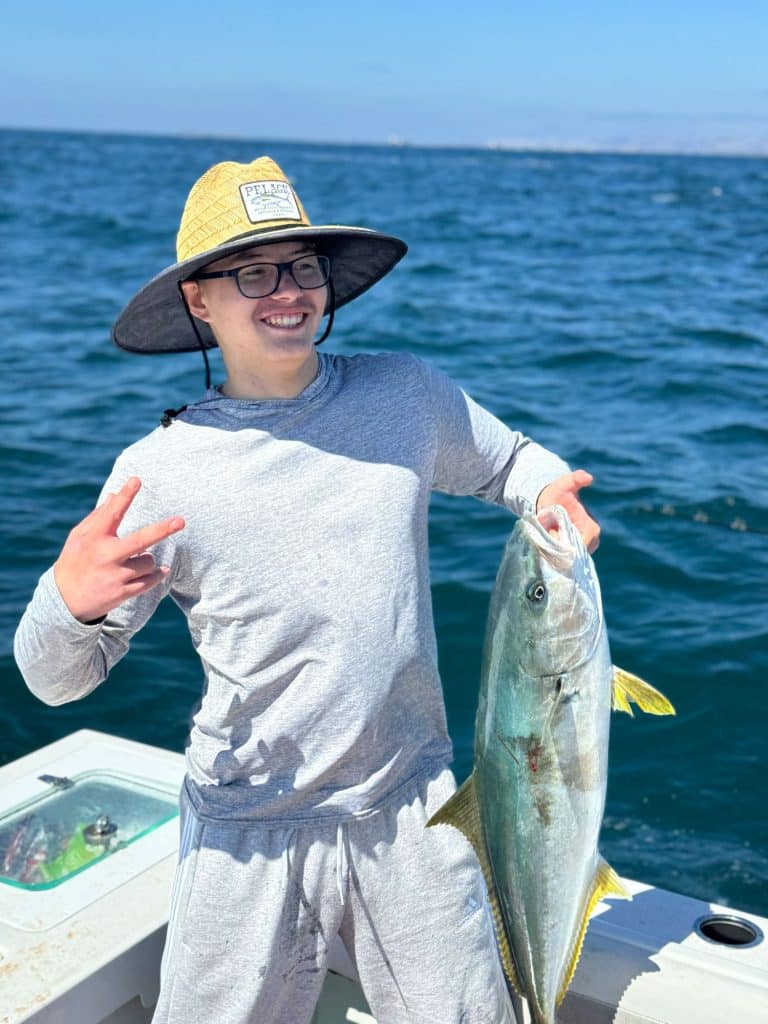
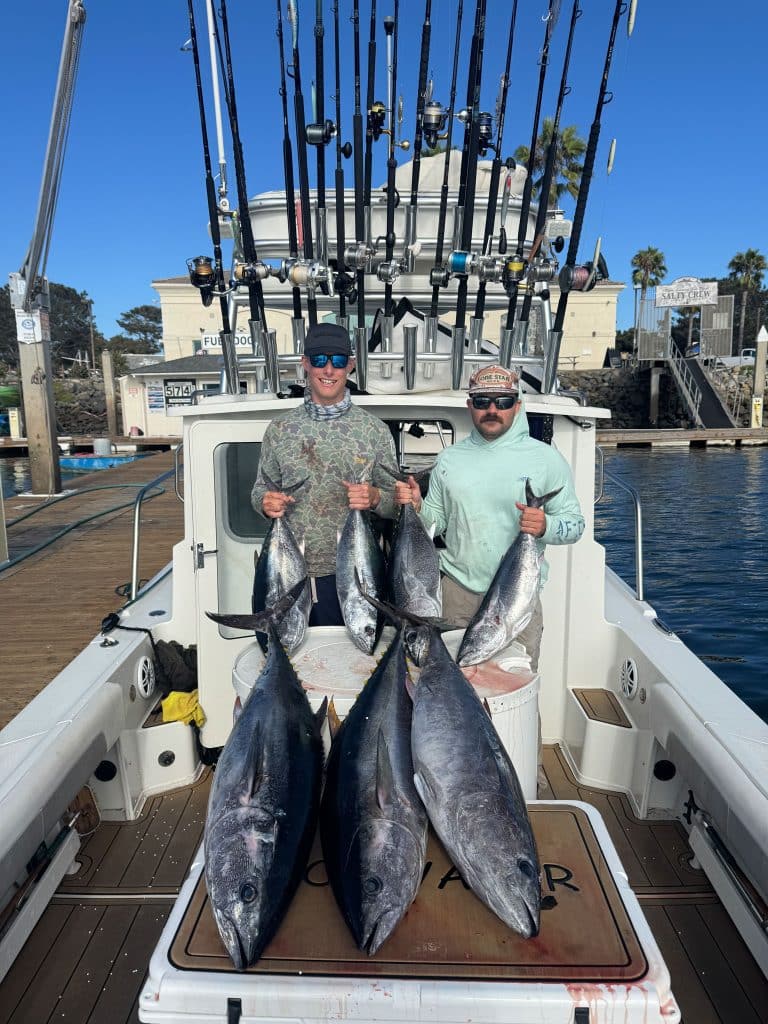
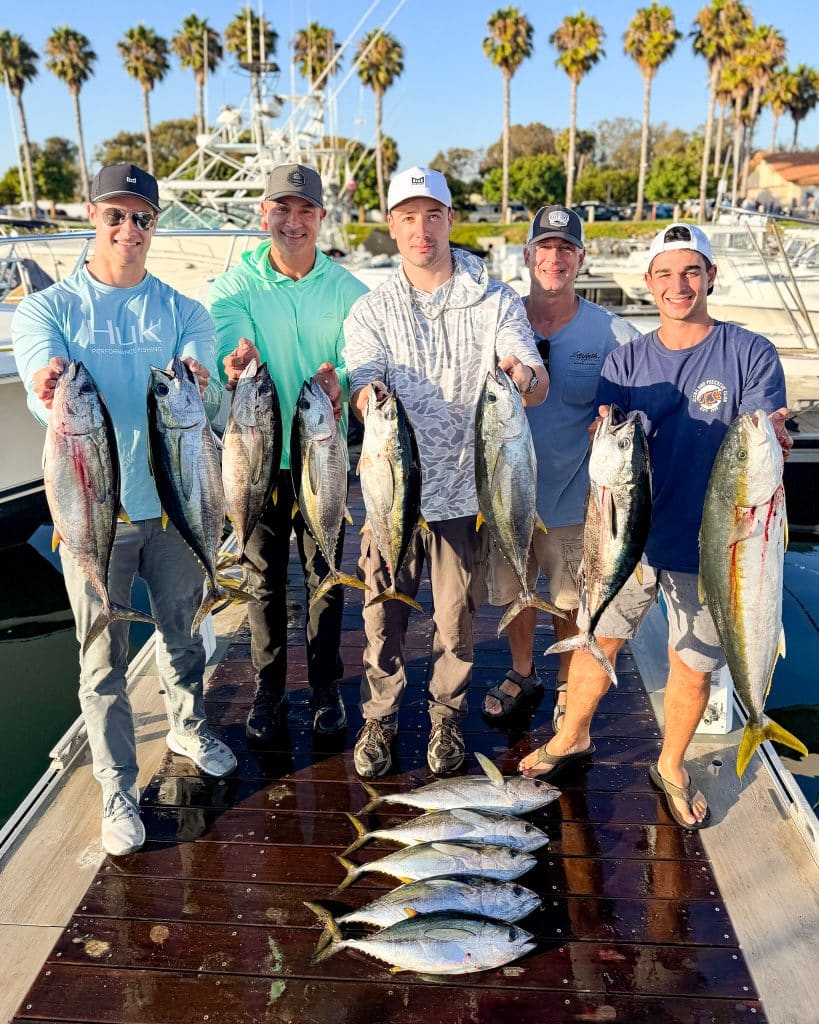
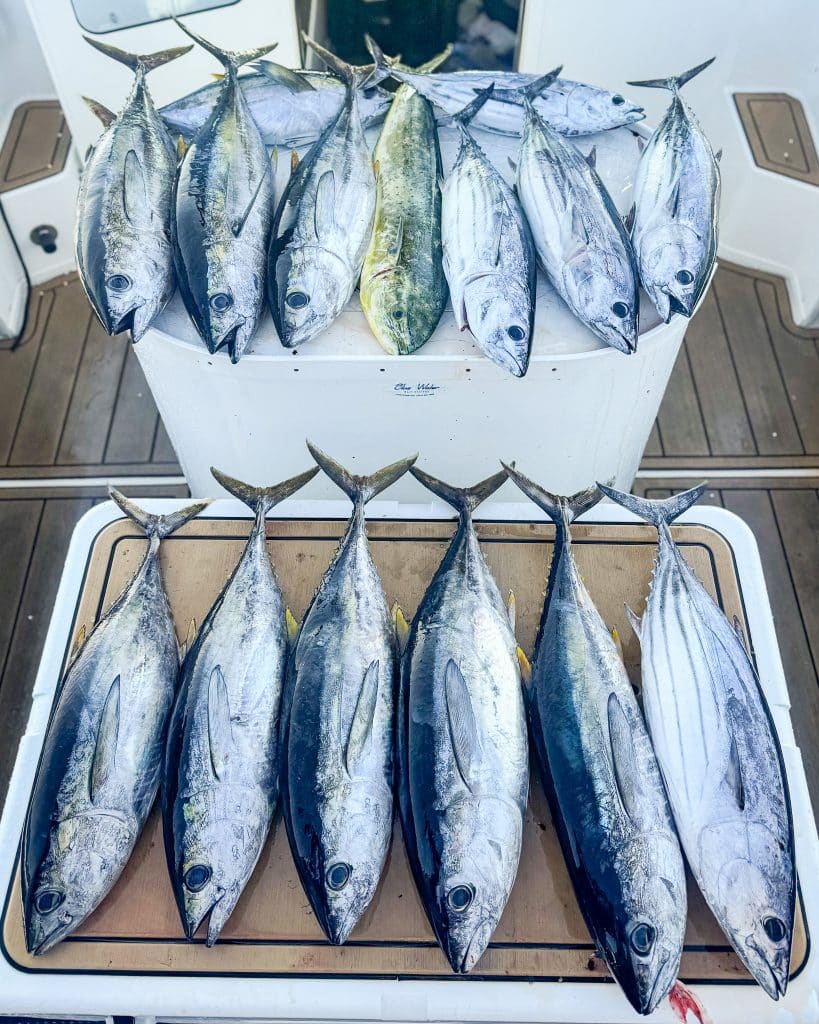
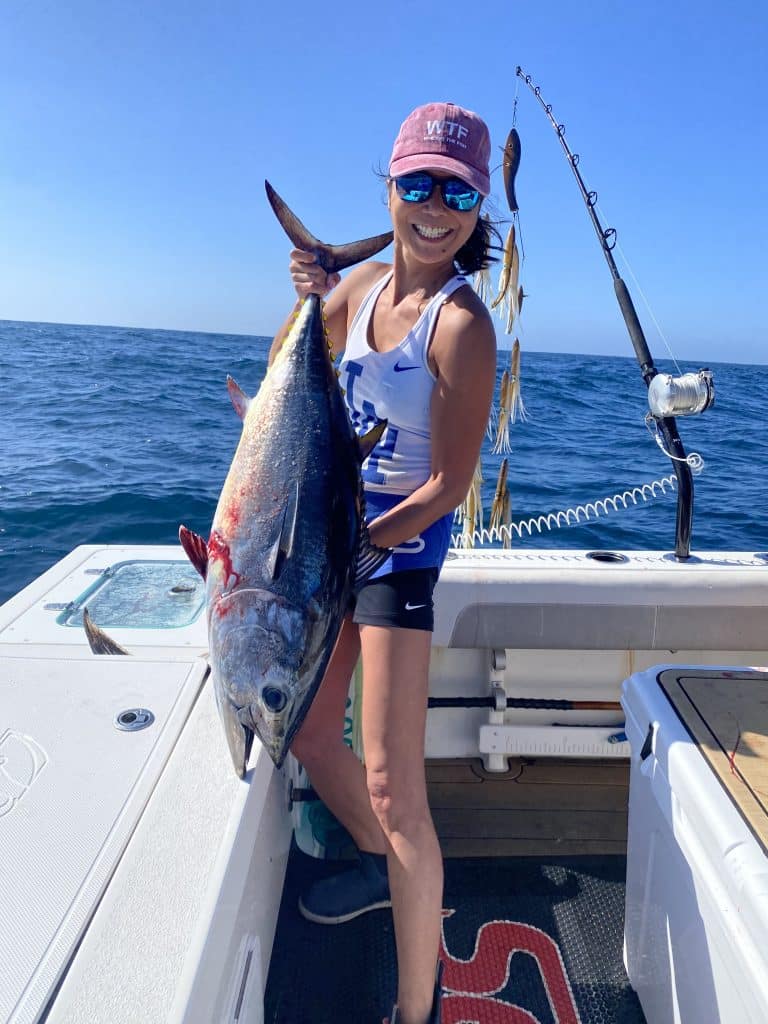
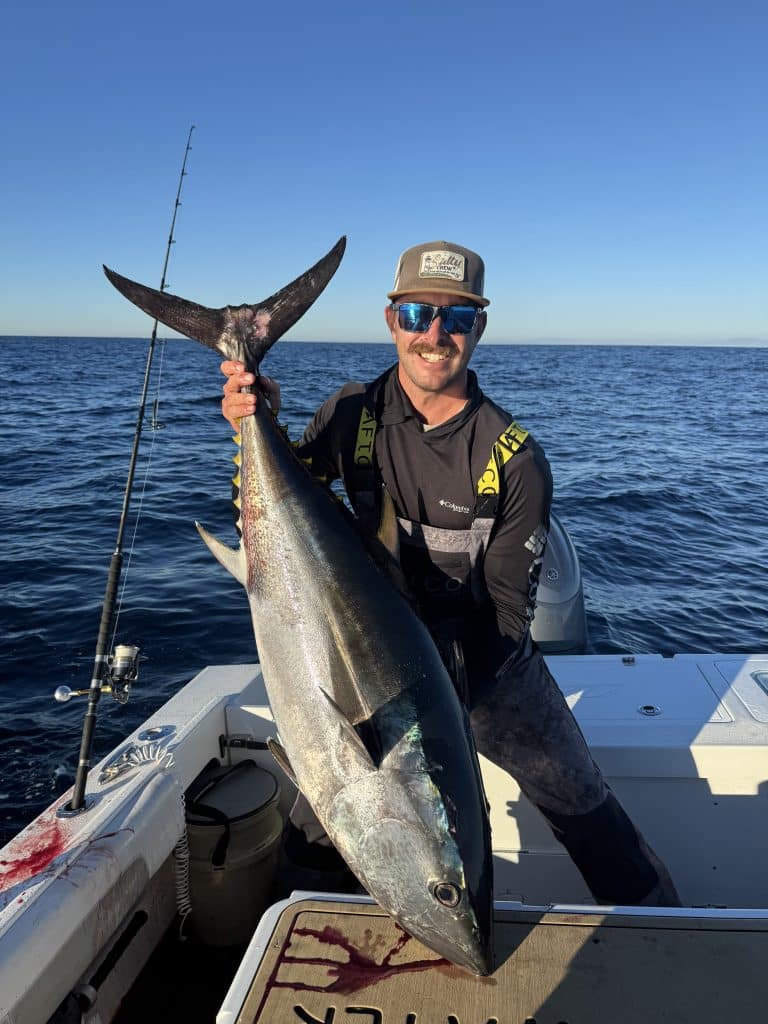
Bigger fish, better numbers, and closer in. Reports in the 40 to 100-plus pound range have become common enough that 50- to 80-pound class gear should be standard on your boat right now. Sonar marks, breezing schools, and birds working bait are all worth running on.
Dorado (Mahi-Mahi)
Our favorite warm-water bonus fish. Find a kelp paddy or a piece of floating debris in blue water and you’ve got a reasonable shot at a school of them. They hit hard, jump constantly, and they’re outstanding on the grill.
The Weird Stuff
Manta rays, sea turtles, and even whale shark sightings have been reported in Southern California during these tropical intrusions. You may not catch them, but seeing one tells you exactly what kind of water you’re in.
Targeting strategy in a nutshell: find the temperature break, find the kelp, find the bait. In El Niño years, structure in blue water matters more than almost anything else, because the productive zone is narrow and the fish stack up on it.
The Flip Side: What El Niño Takes Away
Here’s the honest version that doesn’t always make it into the hype reels.
While recreational anglers are posting hero shots, the broader ecosystem is often under strain. NOAA has documented a recurring paradox during strong El Niño years: outstanding surface fishing happening at the same time as seabird die-offs and elevated marine mammal strandings, all driven by forage-fish scarcity and reduced plankton production.
What shifts during an El Niño San Diego season:
- Market squid spawning grounds get disrupted and often move north or deeper, affecting commercial and recreational fisheries alike.
- Rockfish and other cold-water species slide deeper or migrate north looking for comfortable temperatures.
- Albacore, which prefer that 58–64°F range, tend to stay well offshore or north of us entirely.
- Sardines and anchovies redistribute dramatically, creating pockets of feast and famine.
- Recruitment — the survival of young fish — often suffers in warm years, which can quietly affect fishing two or three seasons down the road.
None of this means you shouldn’t go fishing. It means you should fish thoughtfully. Diversify your targets. Release what you don’t need. Report unusual species sightings to NOAA or California Fish and Wildlife — angler observations genuinely help researchers track how these events unfold.
And a reminder that bears repeating: more fish doesn’t mean different rules. CDFW bag limits, size restrictions, seasonal closures, Marine Protected Area boundaries, licenses, and ocean enhancement stamps all apply exactly as they always do. Check your permits before you leave the dock.
One more safety note. El Niño winters bring storms, swell, and heavy runoff. Warm water does not make the ocean safer. Check NOAA marine forecasts every single trip, keep your communication gear current, and respect rapidly changing conditions.
Riding the Warm-Water Wave
The 2026 El Niño San Diego season is a rare convergence of opportunity and unpredictability. Wahoo, striped marlin, yellowfin, and dorado are within reach of a day trip in ways they simply aren’t in normal years. At the same time, the water is a moving target — yesterday’s hot bite may have relocated 50 miles overnight, and the traditional fisheries we rely on are scattered.
That’s precisely why real-time intelligence matters more than ever. Temperature scouting, satellite imagery, daily fleet communication, and a willingness to abandon a plan mid-trip are what separate a full fish box from a long boat ride.
Coast To Coast Sport Fishing has worked through multiple El Niño cycles off San Diego, and we build every trip around current conditions rather than last month’s playbook. Whether you’re chasing your first billfish or hunting a trophy yellowfin, this window won’t stay open forever. Ecosystem effects may linger 12 to 24 months past the event, but the peak warm-water fishing happens during the strongest phase — which is happening right now.
Get your gear checked, get your license squared away, and let’s go find some monsters.
References
- NOAA Ocean Service — California Record Water Levels: https://oceanservice.noaa.gov/news/nov26/california-record-water-levels.html
- NOAA Integrated Ecosystem Assessment — California Current Ocean Assessment Status: https://www.integratedecosystemassessment.noaa.gov/regions/california-current/california-current-ocean-assessment-status-takeaways-c-coast
- NOAA Fisheries — How Will El Niño Affect Your Local Fisheries: https://www.fisheries.noaa.gov/feature-story/how-will-el-nino-affect-your-local-fisheries
- NOAA Fisheries — Ocean Indicators We’re Tracking El Niño’s Arrival on the West Coast: https://www.fisheries.noaa.gov/feature-story/ocean-indicators-were-tracking-el-ninos-arrival-west-coast
- NOAA Education — El Niño Resource Collection: https://www.noaa.gov/education/resource-collections/weather-atmosphere/el-nino
- NOAA — Understanding El Niño: https://www.noaa.gov/understanding-el-nino
- NOAA Integrated Ecosystem Assessment — 2026 Mid-Season Highlights, California Current Ecosystem: https://www.integratedecosystemassessment.noaa.gov/news/2026-mid-season-highlights-california-current-ecosystem